
Exploring the relationship between food structure, fermentation and gut health in plant-based foods
“Food is far more than a simple source of nutrients. Food’s physical structure, formulation, and processing all play a role in determining how it is broken down during digestion and how the resulting compounds are used by our gut microbiome.
With the growing popularity of plant-based foods and reformulated food products designed for sustainability and health, it is important to understand not only what we eat, but how key metabolites affect food’s function in the body.
The EU-funded FlavourFerm project aims to support the development of tasty, nutritious and sustainable plant-based foods. The project focuses on improving the sensory, nutritional and functional properties of plant-based alternatives through different fermentation strategies.
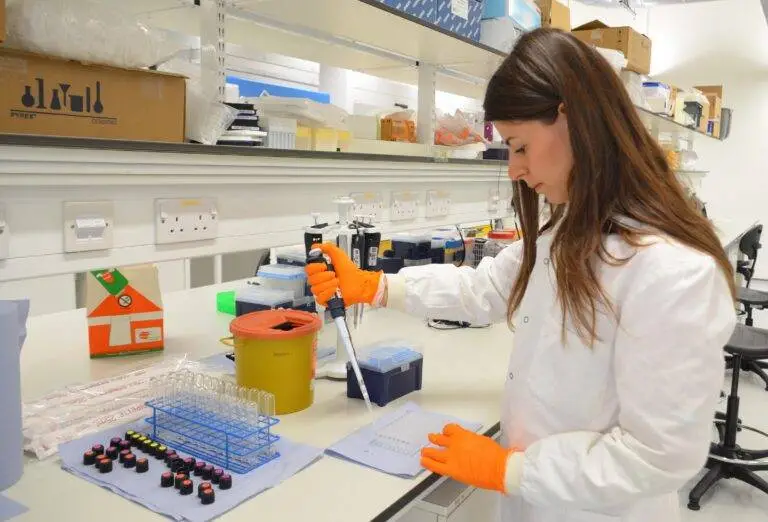
At the Quadram Institute, as part of the Food and Nutrition National Biosience Research Infrastructure, my contribution to the FlavourFerm project is focused on in vitro digestion, which means simulated digestions in the lab, nutritional characterisation, and gut microbiome analysis. This research will help us improve our understanding of how fermented plant-based food products interact with the gut microbiota and ultimately impact human health.
Why plant based fermented foods are important in the shift to more sustainable diets
Producing and eating food is one of the major drivers of global environmental change, contributing significantly to biodiversity loss, greenhouse gas emissions, and pressure on land and water resources. At the same time, global population growth and rising demand for animal-based products are placing increasing strain on food systems.
Dietary shifts towards more sustainable, plant-based foods will be essential to reduce environmental impact while supporting global food security and human health.
However, achieving this transition requires more than simply replacing animal products with plant-based alternatives. The success of these foods depends on their nutritional quality, sensory properties, affordability, and acceptance by consumers.
The nutritional challenge of plant-based alternatives
Many plant-based products still struggle to replicate the complex sensory properties of animal-derived foods such as their characteristic flavour complexity, juiciness, and specific textural properties like creaminess in dairy products or fibrousness and succulence in meat.
In addition, many of these products are perceived as highly processed due to the use of additives required to mimic texture and taste.
Another challenge of plant-based foods is nutrition. The nutritional profile of plant-based alternatives is still under discussion, particularly in relation to protein quality, micronutrient content (such as iron, zinc and vitamin B12), and their effects on the gut microbiome.
These challenges highlight the need for innovative food processing strategies that can improve both the quality and functionality of plant-based foods.
Fermentation can help improve plant-based foods including nutrition
Fermentation is a powerful tool to address these challenges. As a natural and historically established process, fermentation uses microorganisms to transform raw food materials, such as plant-based ingredients and food matrices (the physical and chemical structure of food). Fermentation can:
- improve sensory properties of plant-based foods (e.g. creaminess or firmness depending on the product)
- enhance protein digestibility and nutrient bioavailability (how much is taken up by the body)
- reduce anti-nutritional factors naturally present in plant-based ingredients
Despite their potential, fermentation technologies for plant-based foods remain underdeveloped compared to traditional applications in dairy and other animal-derived products. Optimising these processes for plant-based ingredients is therefore a key research priority.
Developing new plant-based fermented foods through the FlavourFerm project
The FlavourFerm project aims to optimise, demonstrate and scale fermentation technologies to support the development of tasty, nutritious and sustainable plant-based foods.
The project focuses on fermentation strategies:
- precision fermentation involves the animal-free production of dairy proteins such as caseins, which are the main proteins in milk and are responsible for key properties such as texture, creaminess, and emulsification
- biomass fermentation involves growing fungal mycelia (root-like structures), including Fusarium species
- traditional lactic acid bacteria (LAB) fermentation of legumes such as chickpeas, lupin beans and soy-based ingredients
These fermenting approaches are being applied to develop improved plant-based dairy, meat and cheese alternatives with enhanced flavour, texture and nutritional profiles.
By combining microbiology, food science and process engineering, FlavourFerm bridges the gap between food innovation and consumer expectations.
Understanding how the gut microbiome digests plant-based fermented foods
At the Quadram Institute, my contribution to the EU-funded FlavourFerm project focuses on investigating how food structure affects digestive processes and microbial fermentation within the gut.
To investigate this, we are using a combination of standardised in vitro digestion models (INFOGEST) followed by controlled colonic fermentation systems that simulate the human gut environment.
The model gut enables us to track how different food matrices are broken down and transformed by the gut microbiota, and how these processes influence microbial composition and metabolic activity.
This approach allows us to link changes in microbial communities with functional metabolic outputs, providing a more comprehensive understanding of how different food structures influence gut ecosystem activity.
Towards a more sustainable and acceptable food system
FlavourFerm addresses multiple interconnected challenges in the transition towards sustainable diets.
By studying fermented plant-based foods, we can improve the sensory quality of plant-based foods, while reducing reliance on additives and improving “clean label” solutions. The project will allow us to assess nutritional quality and safety of new food products too. It’s exciting that we’ll be understanding gut microbiome interactions of plant-based fermented foods while evaluating environmental sustainability.
Ultimately, this research will support the commercial feasibility and industrial adoption of new and improved plant-based foods.
By integrating these perspectives, the project aims to support the development of next-generation fermented foods that are not only sustainable, but also acceptable, nutritious and scalable.
A system-level to food innovation
Overall, FlavourFerm takes a holistic, system-level approach to food innovation, combining fermentation science, microbiome research, sustainability assessment, and consumer-focused design.
Through collaboration with industry partners, chefs, and stakeholders across the food system, the project aims to accelerate the adoption of fermentation-based solutions daily and support the transition towards more sustainable dietary patterns across Europe.